How Much Does Mold Remediation Cost? A Complete Guide
If you've discovered mold in your home, one of the first questions you'll ask is: how much is this going to cost me?
It's a fair question — and an honest answer requires more than a single number. Mold remediation costs vary significantly depending on the scope of the problem, the contractor you hire, and how completely the job is done. A lot of homeowners are surprised to learn just how many separate cost components can be involved.
This guide breaks down every piece of the puzzle so you know what you're actually paying for — and what questions to ask before signing any contract.
The Short Answer: What Does Mold Remediation Typically Cost?
Industry data puts average mold remediation somewhere between $1,500 and $5,000 for a localized problem, and $10,000 to $30,000 or more for whole-home remediation. But those ranges are nearly meaningless without context — because two homes with "mold in the basement" can require completely different scopes of work.
Here's what actually drives the cost.
1. The Inspection: Finding the Mold
Before any remediation can happen, you need to know the full extent of what you're dealing with. This is more involved than it sounds.
A professional mold inspection typically costs $300 to $800 for an average home, and can run higher for large properties or complex situations. This usually includes a visual walkthrough, moisture readings, and air or surface samples sent to an independent lab.
Here's the thing many homeowners don't realize: sometimes just finding the mold is a significant effort. Mold can be hidden behind drywall, under flooring, inside wall cavities, in attic sheathing, or deep in a crawlspace. An inspector who is thorough is worth the increased cost. Some remediation companies include an inspection in their quote. Others charge separately. Either way, don't skip it.
Included in the inspection is a remediation plan, which can vary widely. The plan involves a varying amount of work and detail, and a good inspector will understand that everyone reacts differently to mold and will tailor their plan accordingly. Some people are not very sensitive, and a knowledgeable inspector will understand that remediations for non-sensitive people will be different than someone who is very allergic or someone with CIRS. Unless you are in a brand new home and have dehumidified while the slab is drying, there is most likely going to be a small amount of mold in your wall cavity somewhere. The remediation plan should involve steps that will help the residents start the recovery process.
2. Demolition and Source Removal
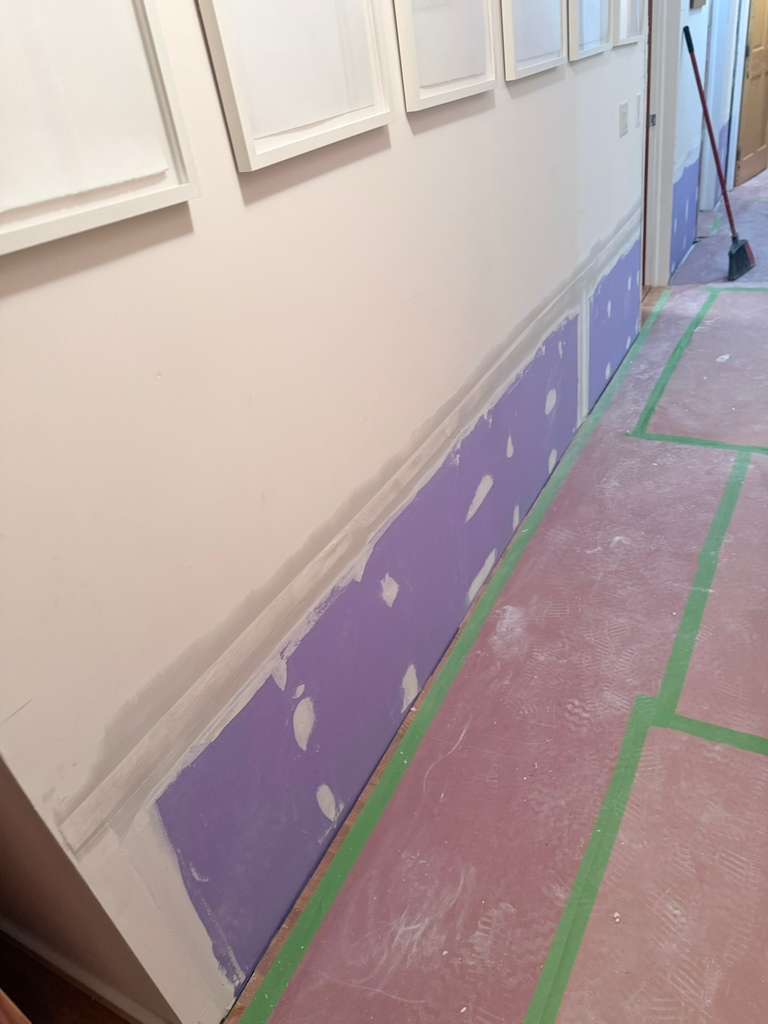
When mold has established itself in building materials — drywall, framing, subfloor, insulation — those materials often need to come out. This is the demolition phase, and it's one of the most variable cost components in any remediation job.
What drives the cost of demolition:
- How many areas are affected — a single wall cavity is very different from an entire finished basement
- Accessibility — is the mold behind a cabinet or in a cramped crawlspace?
- Materials involved — removing certain types of finished flooring, for example, can be very time consuming if, say, 10 layers of vinyl have been glued and stapled onto each other for 50 years.
- Disposal — contaminated materials must be bagged and properly disposed of, which adds cost
- Containment — setting up barriers to prevent spores from spreading during demolition adds time and materials and has varying levels of difficulty depending on location
Critically, the quality of this work depends heavily on the knowledge, care, and experience of the contractor. Sloppy demolition can spread spores throughout the home and make the problem worse. This is not work to hire the lowest bidder for.
Rebuilding after demo (new drywall, insulation, framing repairs) is typically a separate cost, either charged by the same contractor or handed off to a general contractor. Budget $1,500 to $10,000+ for reconstruction depending on scope.
3. Fixing the Leak or Moisture Source
This is the step that many remediation companies don't handle — and it's the one that determines whether the mold comes back.
Mold doesn't grow without moisture. Every mold problem has a source: a roof leak, a foundation crack, a plumbing failure, a ventilation problem, chronic humidity. Before any remediation makes sense, that source needs to be identified and fixed.
This cost varies more than any other component:
- A small plumbing repair: $150–$500
- Roof repair or flashing fix: $500–$3,000+
- Foundation waterproofing or drainage work: $3,000–$20,000+
- Attic ventilation correction: $500–$2,500
- Crawlspace encapsulation: $3,000–$8,000
If a contractor quotes you for remediation but doesn't address where the moisture is coming from, ask why. Either they've confirmed it's already resolved — or there's a problem with the plan.
4. The Mold You Can't See — Treating the Rest of the Home
This is where a lot of remediation jobs fall short — and where a lot of money gets left on the table or wasted.
Here's a fact that changes how you think about mold: between 30,000 and 100,000 mold spores can fit on the head of a pin. Spores are invisible to the naked eye, travel through air, and settle into every porous surface in your home — carpet, furniture, insulation, clothing. Once a mold source has been active, spores have distributed throughout the entire home, not just at the source. Mold doesn’t hurt you because you’re licking the walls. It hurts you because it distributes itself in the air.
Traditional demolition-only remediation removes the active growth, but it doesn't address the spores already circulating in the air and embedded in materials throughout the house. This is why so many homeowners remediate, think they're done, and then continue to have elevated spore counts and ongoing health symptoms.
Attempting to physically remove microscopic spores from an entire home — vacuuming carpets, wiping surfaces, replacing soft goods — is not cost effective and often not even fully achievable. This is the part of remediation where technology matters.
Whole-Home Vapor Treatment
Vapor technology addresses this problem in a way traditional methods cannot. By dispersing a treatment agent as a true vapor — particles small enough to behave like humidity itself — the vapor fills the entire volume of the home, penetrating porous materials and reaching areas that physical cleaning never could.
Independent studies have demonstrated that this type of vapor technology can penetrate five layers of cotton and achieve a 99.9% kill rate in approximately 30 minutes. [link to study]
The practical result: after source removal, a vapor treatment can denature the vast majority of remaining spores throughout the home in a matter of hours — providing a level of completeness that demolition alone cannot deliver.
5. Your Possessions
This is one of the most overlooked — and potentially most expensive — components of dealing with a serious mold problem.
Traditional remediation companies often advise homeowners to discard soft goods: furniture, mattresses, clothing, rugs, books. If spores have distributed throughout the home and the method of treatment is physical removal only, this advice is technically sound. But the cost can be enormous — and devastating for families who've already spent thousands on the remediation itself.
Vapor treatment changes this calculus significantly. Because the vapor penetrates porous materials — the same way spores do — it can treat furniture, clothing, and other soft goods in place or in a treatment area, rather than requiring disposal. For families with expensive furniture, heirloom items, or simply a full household of belongings, this represents a substantial cost savings.
6. Post-Remediation Verification
This is a cost that catches many homeowners off guard — and one that reputable remediation companies will build into their process rather than leaving it as an afterthought.
Post-remediation verification (PRV) is the process of testing after the work is done to confirm that mold levels have been reduced to acceptable levels. Without it, you have no way to know whether the remediation actually worked. Independent lab testing is the gold standard — results from a third-party accredited laboratory carry far more weight than a contractor’s word.
There are two main approaches to post-remediation verification, and they differ significantly in cost:
Containment Verification
When demolition work is done inside a contained area, verification is performed while that containment is still in place. This requires running air scrubbers inside the contained area continuously for 72 hours after remediation is complete, which allows airborne spores disturbed during demolition to settle before sampling. Samples are then taken inside the containment and sent to a lab.
Cost: $600 to $2,000 per contained area, depending on the size of the containment and the number and types of samples taken. A job with multiple containment zones will multiply this cost accordingly. This does not include sampling in the rest of the home.
Whole-Home Verification
Whole-home verification goes further — testing air quality throughout the entire living space, not just at the demo site. This gives a true picture of whether spore levels across the whole home have been brought down to acceptable levels. Because it involves more samples across more areas, the cost is higher than containment-only verification and can vary considerably based on home size and the number of samples required. The level at which you verify the rest of your home is often up to you.
7. Insurance Coverage
Whether insurance covers your remediation depends on the cause and your policy.
Homeowner's insurance typically covers mold remediation when:
- The mold resulted from a sudden, unexpected event — like a burst pipe or appliance failure
- Moisture is still detectable at the time of the claim
- The event was covered under your policy (fire, water, storm)
Insurance typically does not cover mold from:
- Ongoing neglect or maintenance issues
- Gradual leaks that should have been caught earlier
- Pre-existing conditions discovered at home sale
Always contact your insurance company before work begins. A professional remediation company should be able to provide documentation to support your claim.
Summary: What Does a Full Remediation Cost?
- Inspection & testing: $300–$3,000 (depends on number of samples needed)
- Post-remediation verification: $600–$2,000 per containment area; higher for whole-home verification
- Demolition & source removal (localized): $500–$5,000
- Demolition & source removal (extensive): $5,000–$15,000+
- Fixing the moisture source: $150–$20,000+ (highly variable)
- Whole-home vapor treatment: varies by home size
- Reconstruction (drywall, insulation, finishes): $1,500–$10,000+
- Possessions (without vapor treatment): potentially thousands in replacement costs
A localized, well-contained problem caught early — attic mold on accessible sheathing, a small section of basement framing — can be handled for $2,000–$6,000 all-in. A larger whole-home scenario with an ongoing moisture problem and years of spore accumulation can exceed $20,000 once all components are considered.
What to Ask Before Hiring a Remediation Company
Not all remediation companies are equal, and the cost difference between a thorough job and a sloppy one can be enormous — both in price and in outcome. Before you hire anyone, ask:
- Do you address the entire home, or just the visible source?
- What containment procedures do you use during demolition?
- How do you verify the remediation worked? (Independent lab testing is the gold standard)
- Do you do anything about spores in the air and materials beyond the demo area?
- Do you offer any warranty or guarantee?
- What happens to my furniture and soft goods?
A contractor who can answer all of these clearly — and whose answer includes lab-verified results — is worth more than one who offers a lower number and fewer details.
Getting a Quote in Wisconsin
At Pure Maintenance Wisconsin, we provide a full-service approach that addresses both source removal and whole-home vapor treatment — verified by independent lab testing after every job. We serve Madison, Milwaukee, and communities throughout Wisconsin.
Call us at 608-893-6620 or request a free quote at puremaintenancewi.com. There's no obligation — we're happy to talk through your situation and give you an honest picture of what you're dealing with.
.png)

.avif)